Work with existing permit holders
Identify permits and projects that fit your commodity, geological and investment criteria, then build relationships with current holders around partnerships, joint ventures, farm-ins or project acquisition.

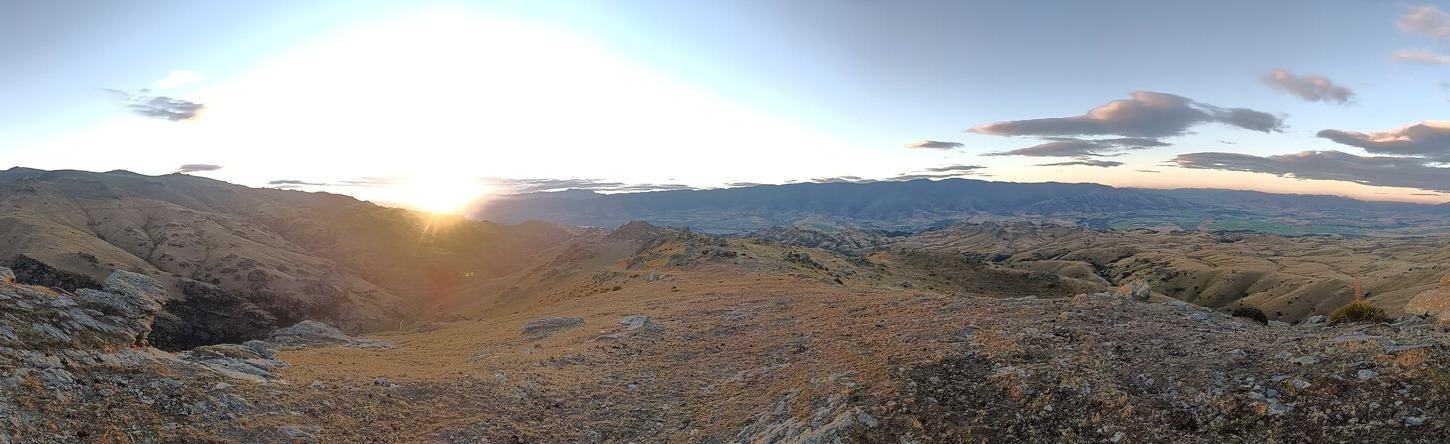
Why explore in New Zealand?
New Zealand combines proven mineral districts, extensive public geoscience and established legal institutions with a current policy programme intended to increase responsible exploration, mining and mineral-sector investment.
Finding the right opportunity
Wairiri is exceptionally well connected across New Zealand’s exploration and mining sector. We can help overseas and New Zealand groups identify suitable opportunities, reach the right people and turn an initial interest into a practical route forward.
Identify permits and projects that fit your commodity, geological and investment criteria, then build relationships with current holders around partnerships, joint ventures, farm-ins or project acquisition.
Screen open ground using public geoscience, historic records and modern mineral-system thinking, then prepare the geological rationale, permit application and staged work programme needed to establish a new position.
Use Wairiri’s relationships with permit holders, explorers, investors, contractors and technical specialists to make credible introductions, facilitate discussions and help broker appropriate project deals.
Tell us what you are looking for and where you want Wairiri to add value.
Why now?
Prime Minister Christopher Luxon said mining needs to play “a much bigger role” in the economy. Resources Minister Shane Jones has led an active policy programme intended to move New Zealand from being “open for business” to “doing business”, while retaining environmental, safety and community requirements.
The Crown Minerals Act purpose was amended in 2025 to promote prospecting, exploration and mining of Crown-owned minerals for New Zealand’s benefit—a clear change in policy signal.
The Minerals Strategy aims to double annual mineral exports to NZ$3 billion by 2035. In July 2026, the Government reported that exports had increased from NZ$1.46 billion in 2023 to about NZ$2.5 billion in 2025.
Qualifying mining projects of regional or national significance can use the Fast-track Approvals Act to bring a mining permit and other required approvals into one coordinated process, providing a clearer route from an established resource towards development.
Explore the Fast-track pathway ↗The geological case
New Zealand’s tectonic history has produced a wide range of mineral systems. The opportunity is not simply to revisit old workings: modern structural interpretation, geochemistry, geophysics, three-dimensional modelling and disciplined drilling can test targets that earlier campaigns did not recognise or could not effectively evaluate.
OceanaGold reports more than 5 million ounces of gold produced at Macraes over 35 years of continuous operation. The Hyde–Macraes Shear Zone extends for more than 26 kilometres and remains an important analogue for regional targeting.
Santana Minerals’ 2021 Rise and Shine discovery followed renewed drilling of a long-known Otago gold system. By March 2025, the wider Bendigo–Ophir project contained a reported 2.34 Moz gold Mineral Resource, demonstrating what a revised structural model and sustained drilling can reveal.
Official assessments identify widespread orogenic gold ± tungsten ± antimony mineralisation in Otago schist and gold, antimony and tungsten potential across the wider West Coast–Tasman region. Reefton adds a proven historic quartz-reef gold district to that opportunity.
In Wairiri’s view, Rise and Shine has materially strengthened the case for testing other South Island structural corridors with updated geological models. It does not prove that multiple +1 Moz deposits remain to be found: discovery size, continuity, metallurgy and economic viability still have to be demonstrated through systematic exploration.
Start with evidence
New Zealand provides online geological maps, geophysical and geochemical datasets, technical reports, permit webmaps and a national geodata catalogue. NZP&M also maintains exploration data packs, mine plans and the National Core Store.
Public data does not remove exploration risk, but it helps teams screen opportunities, identify gaps and design proportionate first-stage programmes before committing to expensive fieldwork or drilling.
View the minerals permit mapNew Zealand offers democratic institutions, contract law, defined mineral tenure and established employment and health-and-safety systems.
The Minerals Strategy, Critical Minerals List, Crown Minerals Act amendments and Fast-track legislation provide a clearer pro-development signal than New Zealand has offered for many years.
A Crown minerals permit is only one part of the pathway. Land access, conservation permissions, council rules, resource consents and other approvals may also apply.
Investment rankings
New Zealand ranked 12th of 82 jurisdictions in the Fraser Institute’s 2024 Investment Attractiveness Index, published in July 2025. It then ranked 40th of 68 in the 2025 survey, published in February 2026.
The sharp year-to-year movement shows why one survey result should not be treated as a permanent “tier-one” rating. New Zealand’s stronger investment case rests on its geological potential, institutions, public data and current policy changes—not an outdated single-year rank.
Read the Fraser Institute’s 2025 mining survey ↗Wairiri’s perspective
Attractive geology is not enough. New Zealand programmes must be designed around landowners and occupiers, iwi and hapū interests, environmental effects, access, terrain, weather, contractor availability, health and safety, capital and realistic decision points.
Wairiri helps connect those practical constraints to the geological question early, so the work programme remains scalable, defensible and capable of producing a useful answer.
Primary sources
Promotional claims on this page are anchored to current New Zealand Government and official geological material. Project-specific requirements must still be checked for the proposed location and activity.
Hamish McLauchlan served as Exploration/Geology Manager for Santana Minerals for approximately three years, joining shortly after the initial Rise and Shine discovery. That first-hand experience includes the geological, targeting and programme-delivery work involved in advancing a significant new Otago gold discovery.
Explore Santana Minerals’ Bendigo–Ophir project ↗Start a conversation
Bring Wairiri in early to turn scattered information into a practical exploration pathway.